Measure Twice, Cop Once: A UK Fit Check for Air Jordans
There is a particular kind of regret that comes with a badly sized Air Jordan. It is not the full-on heartbreak of a missed raffle. It is quieter than that. It is the box sitting by the door, the laces still factory-fresh, the returns label half-filled in, and the slow realisation that the pair you chased across three group chats is just not going to work on your foot. In the UK, where half sizes can disappear from stock fast and returns windows demand a bit of discipline, getting fit right first time is its own form of sneaker intelligence.
Start With Your Actual Foot, Not Your Usual Number
Most of us have a default size we quote like a postcode. Mine is a UK 9. Yours might be a UK 8. But Air Jordans do not always respect that number. The brand has released dozens of silhouettes over the decades, and each one carries its own last, padding package and toe-box shape. A UK 9 in one model can feel roomy enough for a thick sock; the same UK 9 in another can press on your little toe before you have even left the hallway.
Before you buy, measure your foot properly. Stand on a piece of A4 paper against a wall, mark the end of your longest toe, and measure heel to toe. Do it late in the day, because feet swell. Do it in the socks you actually wear with Jordans — not the paper-thin pairs from a wedding, and not the thick hiking socks you save for December. If you wear orthotics, measure with them in. This is not clinical admin; it is the difference between a rotation you wear and a shelf you admire.
The Half-Size Trap
The half size is where UK buyers lose the most money. When a pair is tight, the instinct is to go up half. When it is slightly roomy, the instinct is to go down half. Both can be right, but neither is automatic. Air Jordan 1s, for example, often feel generous in length but narrow across the forefoot. Sizing up can ease the width and leave you swimming at the heel. Sizing down can lock the heel but squeeze the toes. That is the half-size trap: solving one problem by creating another.
A better approach is to ask what kind of fit you want. If you like a snug, almost locked-in feel and you have a narrow foot, your true size may be perfect. If you have a wider foot or you wear thicker socks through autumn and winter, half up can make sense in some models. If you are between sizes and the shoe has a padded collar or an inner bootie, going down can sometimes work better than going up. The key is to stop treating half sizing as a coin flip and start treating it as a model-specific decision.
Model-by-Model: Where Jordans Get Tight
Air Jordan 1s are the classic example of a shoe that can feel roomy in length and snug across the toes. The leather upper can soften, but the toe box does not magically widen overnight. If you have broad feet, try before you buy where possible, or choose a retailer with a straightforward returns process.
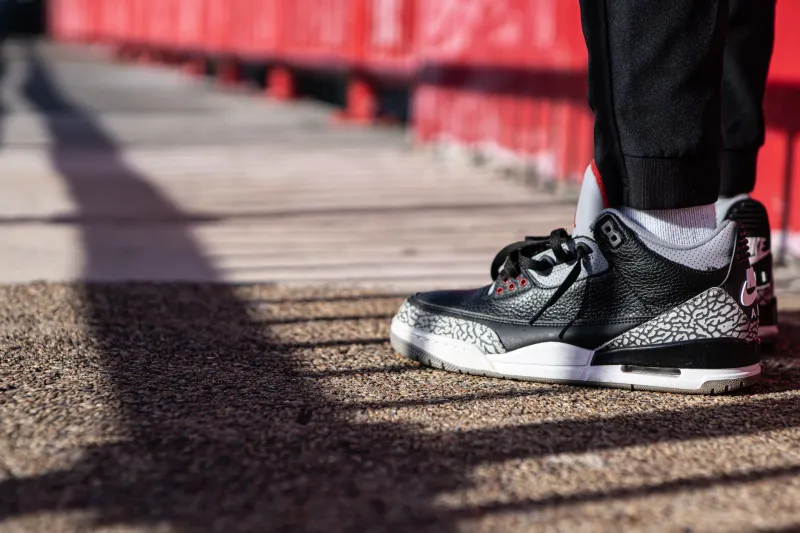
Air Jordan 3s and 4s tend to feel more substantial. The padding and structured panels can make them feel tighter around the midfoot, especially if you have a high instep. Some people go true to size and let them break in; others prefer half up for immediate comfort. Air Jordan 11s are a different conversation again. The patent mudguard and inner bootie can make the fit feel precise, almost formal, and the toe box can be less forgiving than you expect. Air Jordan 12s often feel stiff out of the box, while Air Jordan 13s can run a little long for some feet. None of this is universal — it is a starting map, not a guarantee.
Wide Feet, Orthotics and Thick Socks
If you have wide feet, the UK market can feel like it is designed for someone else. The good news is that not every Jordan is a vice. The bad news is that you cannot assume a half size up will fix everything. Going up too far can cause heel slip, which is its own misery on a wet pavement. Look for models with softer uppers, avoid pairs that feel tight across the top of the foot, and be honest about whether you will actually wear them with the socks you own.
Orthotics add another layer. Remove the standard insole if you need the space, but check that the shoe still feels stable. If the heel slips or the arch sits in the wrong place, the size is wrong for you, no matter what the label says. And if you plan to wear your Jordans through a British winter, remember that thicker socks change the fit. A pair that feels perfect in July can feel like a tourniquet in January.
The Online Returns Game
Online shopping is where most UK buyers take the risk. The product page says true to size, the reviews say size up, and your mate says his pair fit fine. The safest approach is to check the returns policy before you check out. Look for the return window, whether the box and tags must be intact, and whether sale or raffle items are excluded. Keep the packaging clean, try the shoes indoors on carpet, and do not wear them outside. A creased sole and a scuffed toe box can turn a simple return into a debate.
If you are buying resale, ask for insole measurements and photos of the size tag. Reputable sellers will provide them. If they will not, treat that as information. And if you are buying from a marketplace, remember that returning a pair can be slower and more expensive than returning to a major UK retailer. The resale regret tax is real: postage, fees, time and the mental cost of relisting a pair you never wanted to sell.
A Simple UK Buying Checklist
Measure your foot in the socks you will wear. Check the specific model's fit reputation rather than the brand as a whole. Read the returns policy before you pay. Try the shoes indoors with the laces loosened, then tightened. Walk around for ten minutes. Check the heel, the toe box and the widest part of your foot. If anything pinches, do not convince yourself it will stretch. Some leathers soften; structure does not disappear. And if you are between sizes, choose the pair that feels better on the foot you have today, not the foot you had in 2019.
Air Jordans are meant to be worn, not survived. The right size is the one that lets you walk to the bus stop, stand in a queue and still want to keep them on. Get that part right, and the rest of the rotation gets a lot easier.