The Absent List: Jordan Colourways That Never Touched Down in the UK
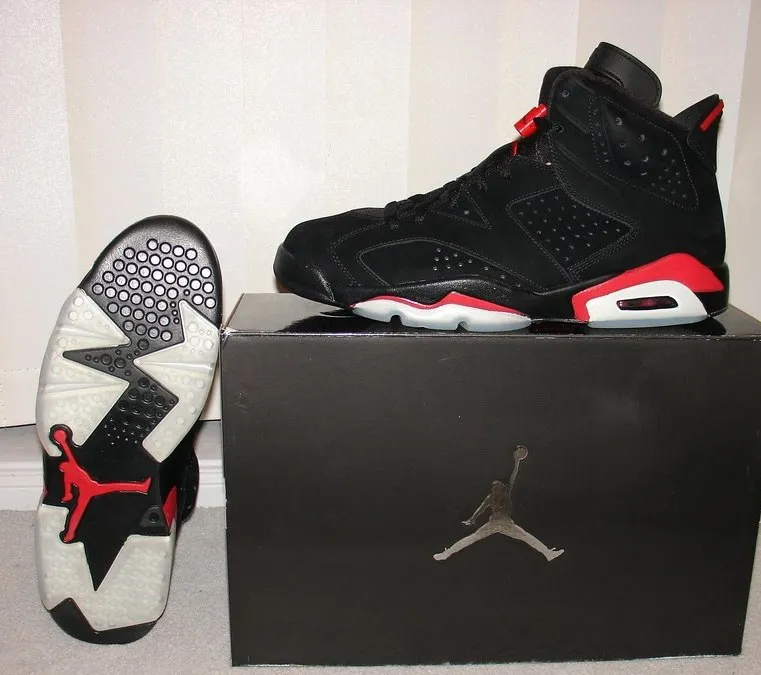
Photo: ric_man (talk), CC BY-SA 3.0, via Wikimedia Commons
There is a particular kind of silence that follows a Jordan drop you were never invited to. Not the silence of a sold-out raffle, or the hollow refresh of a SNKRS UK page that never loaded. This is deeper. It is the silence of a release that happened, fully, loudly, somewhere else — and left no trace on British soil beyond a few grainy images and a resale listing with a customs charge attached.
Every UK collector has one. A ghost pair. The colourway that seemed designed for your rotation, your city, your exact shade of grey jumper — and yet never made it past a regional allocation spreadsheet. In 2026, with global drops still uneven and UK size runs still feeling like an afterthought, the absent list is longer than we like to admit. And the strange thing? We have learned to love the gaps.
The Geography of a Snub
Jordan Brand has never been shy about playing favourites. Regional exclusives are part of the game — a way to feed local hype, reward key accounts and keep the map interesting. But from a British perspective, the map has often felt like a pub with no seats left. You can see the pint. You just cannot get to the bar.
The mechanics are rarely dramatic. A release might be locked to North America because of a retail partner. A women's exclusive might land across Europe but in such shallow numbers that UK stores receive a single size run — or none at all. A quickstrike might be allocated to Tier 0 accounts in major cities, and if your city does not have one, you are spectating. None of this is personal. It just feels personal when the pair you have been screenshotting for weeks never appears in a UK 9.
What makes it worse is the language. "Global release" has a lovely ring to it until you read the footnotes. Global, in sneaker terms, often means "global where we feel like it". And the UK — a market with serious collector heritage, a deep resale scene and a stubbornly loyal Air Jordan following — has spent decades learning to read between those lines.
The Tokyo Temptation
No region has produced more UK heartbreak than Japan. The Air Jordan 1 "Tokyo" from 2001 is the patron saint of the absent list: a Japan-only release with a colour story that still looks futuristic a quarter of a century later. Then there is the Air Jordan 3 "Atmos" from 2007, a elephant-print dream that never sniffed a British shelf, and the Air Jordan 5 "Tokyo" from 2011, which turned a regional drop into a full-blown import saga.
For years, the only way to get these pairs in the UK was through connects, proxy buyers or the kind of eBay listings that required a leap of faith and a very patient bank transfer. The mythology grew because the access was so narrow. A Tokyo-only Jordan was not just a shoe; it was proof that someone had gone further, tried harder, knew a person who knew a person. In an era before every drop was livestreamed, that felt like real currency.
US-Locked and Loaded
Stateside exclusives hit differently because they are often the loudest. The Air Jordan 1 "Jeter" from 2013, a Yankee-flavoured tribute, was never going to be a UK high street staple. The "Homage to Home" Air Jordan 1 from 2018 — half Chicago, half Bred, all chaos — landed in such limited US numbers that most British collectors only ever saw it on someone else's feet, usually in a YouTube unboxing filmed in a kitchen in Ohio.
These are the pairs that make the UK feel like a satellite market rather than a centre of gravity. You can argue that exclusivity is the point — that the chase needs to hurt a little. But there is a difference between a chase and a locked door. When a release is geographically impossible, the culture around it changes. It becomes folklore. People stop talking about the leather quality and start talking about the story of how they nearly got a pair, or how a mate of a mate had a cousin in New Jersey.
Import Culture: Forwarding, Fees and the Art of the Workaround
The British response to the absent list has always been resourceful. Before resale apps were mainstream, there were forum group buys, suitcase hauls and the delicate art of asking a relative to "just pop it in the post". Today it is sophisticated: forwarding addresses, proxy services, raffle entries through international accounts, and the quiet acceptance that import VAT and handling fees are simply part of the ticket price.
Brexit added a fresh layer of admin to the ritual. Customs declarations, courier surcharges and the occasional hostage situation at a sorting office have become part of the import experience. Yet the workaround culture persists because the desire persists. There is a certain streetwise pride in sourcing a pair that never officially existed here. It says you are not just buying what you are given. You are building a collection on your own terms.
Why the Myth Still Matters
In 2026, the UK sneaker scene is more connected than ever. Drops are announced in real time, resale prices are visible, and a pair released in Seoul can be on a British doorstep within a week — if you are willing to pay. But connection has not erased the hierarchy. If anything, it has made it clearer. The absent list is a reminder that global sneaker culture still has a centre, and the UK is not always it.
That might sound like a complaint. It is not. The gaps have shaped British collector culture in ways that a fully stocked shelf never could. They have made us scavengers, historians and storytellers. They have given us grails that cannot be bought on a whim, and conversations that start with "you remember the one we never got?" They have taught us that access is not the same as appreciation.
The ones that got away are still doing their work. They sit in the background of every drop, quietly asking whether this time the UK will be on the list. And when it is not, we do what we have always done: we moan, we laugh, we find a way. Then we add another name to the absent list — and start mythologising it before the resale prices even settle.